How Intelligent Solar Tracking Improves Long-Term Performance of Utility-Scale PV Farms
Nov 13, 2025
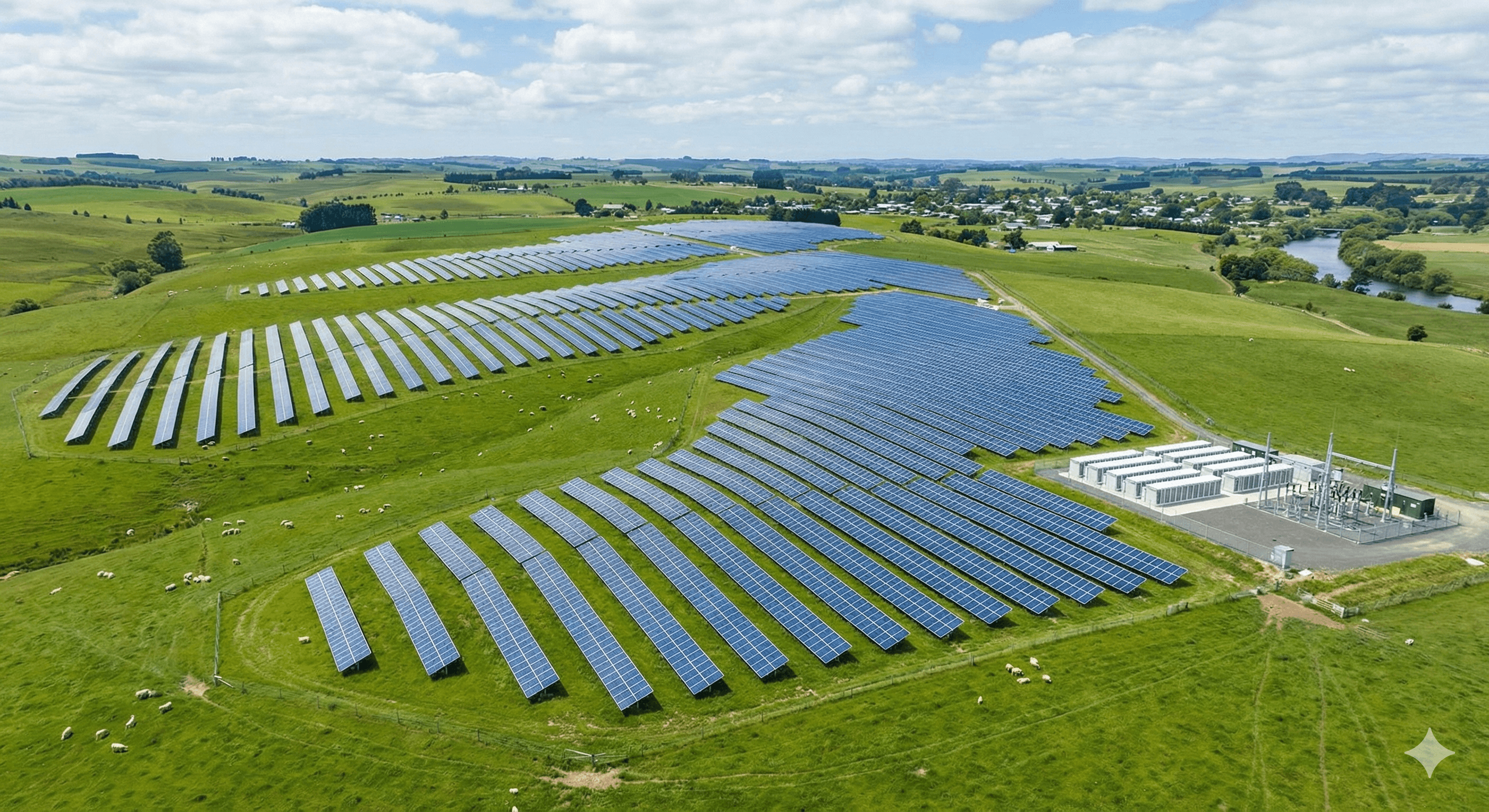
Why Mechanical Reliability Is Becoming the Key Risk Factor in Utility-Scale Solar
For years, discussions around utility-scale photovoltaic projects have focused primarily on energy yield and cost per megawatt installed.
Today, however, the conversation is shifting.
As solar farms grow larger and investment horizons stretch to 25–30 years, mechanical reliability is emerging as one of the most critical — and underestimated — risk factors in PV projects.
The Scale Problem in Modern Solar Farms
Utility-scale PV farms now consist of:
thousands of tracker rows
tens of thousands of moving components
vast geographic footprints exposed to weather extremes
At this scale, even minor mechanical weaknesses can translate into:
significant downtime
higher O&M costs
increased operational uncertainty
What was once an acceptable risk in smaller installations becomes a serious liability in large-scale projects.
Single Points of Failure and Their Financial Impact
Many conventional solar trackers rely on centralized drive systems, where one motor or gearbox controls an entire row of panels.
From an engineering perspective, this simplifies construction.
From a risk perspective, it introduces a single point of failure.
When a central drive fails:
entire rows stop tracking
energy production drops immediately
maintenance interventions become urgent and costly
Over time, repeated failures can undermine both performance guarantees and investor confidence.
Extreme Weather Is No Longer an Edge Case
Climate conditions are becoming less predictable across most PV markets.
Solar farms increasingly face:
heavy snow loads
strong winds
hail events
rapid temperature changes
Mechanical systems that were designed for “average” conditions are now expected to perform under extremes — repeatedly and reliably.
Trackers that cannot adapt mechanically to these conditions expose projects to:
structural damage
extended outages
higher insurance and repair costs
Bankability Depends on Predictability
From the perspective of investors and lenders, the most important quality of any PV technology is predictability.
Reliable systems:
reduce operational surprises
simplify maintenance planning
stabilize cash flows
improve long-term asset valuation
As a result, mechanical robustness and fault tolerance are becoming as important as headline efficiency figures when assessing new PV projects.
The Future of Solar Tracking: Designed for Risk, Not Just Yield
The next generation of solar tracking systems will be judged not only by how much energy they produce, but by:
how they behave under stress
how failures are isolated rather than propagated
how easily issues can be diagnosed and resolved
In this context, tracker design is evolving from a purely mechanical challenge into a system-level reliability problem.